
Seeded no knead jar bread is the ultimate solution for busy home bakers who crave the smell of fresh, artisan loaves without the heavy lifting. This seeded no knead jar method simplifies the fermentation process by utilizing the glass container itself as both the mixing bowl and the proofing basket. It is a foolproof way to achieve a perfect crust and an airy, seed-packed crumb every single time. 🥖
Table of Contents

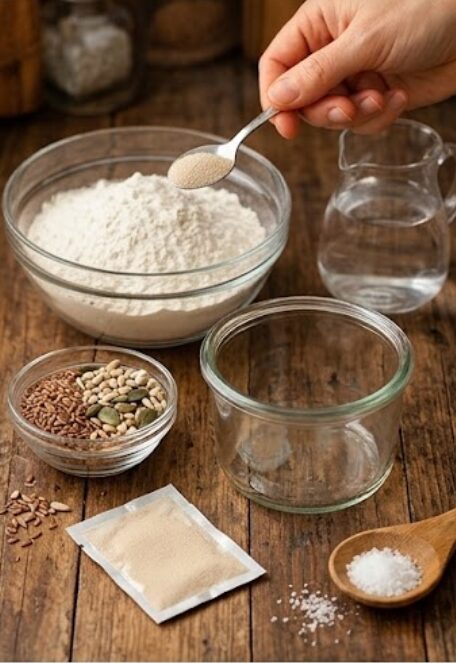
Ingredients
- 3 cups All-purpose or bread flour
- 1 1/2 cups Warm water (about 100°F or 38°C)
- 1 teaspoon Active dry yeast
- 1 1/2 teaspoons Sea salt
- 1/4 cup Flaxseeds
- 1/4 cup Sunflower seeds
- 2 tablespoons Pumpkin seeds (pepitas)
- 1 tablespoon Sesame seeds for the topping
| Category | Details |
| Total Time | 14 hours |
| Prep Time | 10 minutes |
| Cook Time | 35 minutes |
| Cool Time | 1 hour |
Preparation Steps
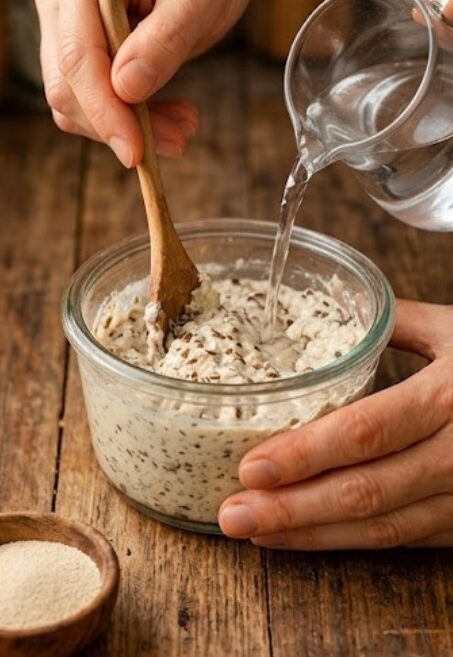
1. Mix the Base: In a large, wide-mouth glass jar or a high-sided glass bowl, combine the flour, salt, yeast, and all the seeds except for the sesame seeds. Pour in the warm water and stir with a wooden spoon or spatula until a shaggy, sticky dough forms and no dry flour remains.
2. The Long Rest: Cover the jar loosely with a lid or plastic wrap. Let the seeded no knead jar dough sit at room temperature for 12 to 18 hours. This slow fermentation is what develops the complex flavors and creates the gluten structure without any physical kneading.
3. Shape and Final Proof: Once the dough has doubled in size and looks bubbly, gently deflate it with a spatula. If you are baking directly in the jar, ensure the glass is oven-safe (like a tempered canning jar). Sprinkle the top with sesame seeds and let it rest for another 30 to 60 minutes.
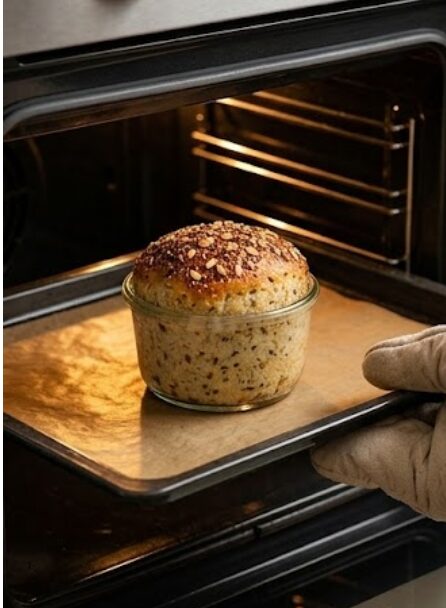
4. The Bake: Pre-heat your oven to 450°F (232°C). Place the jar on a baking sheet. Bake for 30 to 35 minutes until the top is golden brown and the internal temperature reaches approximately 200°F (93°C).
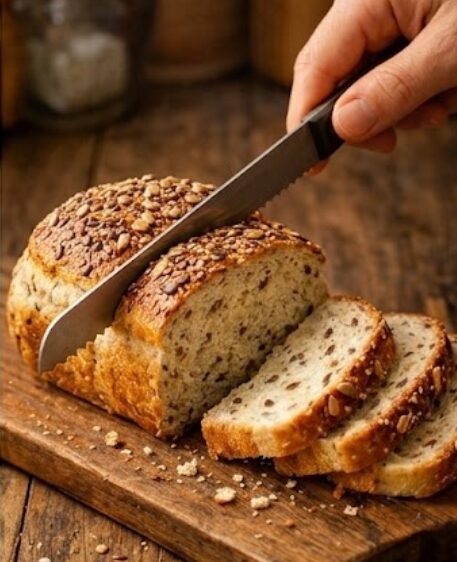
5. Extraction and Cooling: Carefully remove the jar from the oven. Let it sit for 5 minutes, then slide a thin knife around the edges to release the bread. Transfer the loaf to a wire rack to cool completely before slicing. 🍞
Why the Seeded No Knead Jar Method Works
The magic behind the seeded no knead jar technique lies in high hydration and time. When dough has a high water content, the gluten molecules can move more freely, aligning themselves into a strong network over several hours. The glass jar acts as a micro-environment that traps moisture, effectively steaming the bread as it bakes.
This method mimics the professional “steam injection” ovens used in bakeries. By keeping the dough contained, you ensure the bread rises upward rather than spreading out, resulting in a tall, proud loaf.
Health Benefits of Multi-Seed Breads
Choosing a seeded no knead jar recipe isn’t just about the crunch; it is a significant nutritional upgrade over plain white bread. Seeds like flax and sunflower provide essential Omega-3 fatty acids and Vitamin E.
Additionally, the long fermentation process breaks down phytic acid found in grains. This makes the minerals in the flour and seeds more bioavailable to your body and often makes the bread easier to digest for those with mild gluten sensitivities. 🌻
Nutrition Facts (Per Serving)
- Calories: 185 kcal
- Total Fat: 4g
- Sodium: 290mg
- Total Carbohydrates: 32g
- Dietary Fiber: 3g
- Protein: 6g
Serving and Storage Tips
To enjoy your bread at its peak, wait until it is completely cool before slicing; cutting into hot bread can result in a gummy texture. This bread is incredible when toasted and topped with avocado, honey, or a simple smear of salted butter.
For storage, keep the loaf in a paper bag at room temperature for up to two days. If you want to keep it longer, slice the loaf and freeze the slices in a sealed bag. You can pop a frozen slice directly into the toaster for a “fresh-baked” taste any morning.
Frequently Asked Questions
Can I use whole wheat flour for a seeded no knead jar?
Yes, you can substitute up to 50% of the white flour with whole wheat. Note that you may need an extra tablespoon of water, as whole grains absorb more liquid.
Does the jar need to be greased?
It is highly recommended to lightly grease the jar with olive oil or use a light dusting of cornmeal at the bottom to prevent sticking.
My dough didn’t rise, what happened?
Advertisement
Check the expiration date on your yeast. Also, ensure your water is warm but not hot; water above 120°F (49°C) can kill the yeast cells.
The seeded no knead jar approach is more than just a trend; it is a return to traditional, slow-paced baking that fits into a modern schedule. By letting time do the hard work, you can enjoy artisanal quality with minimal effort.
If you try this recipe, share how your crust turned out or what seed combinations you experimented with in your own kitchen!
Ingredients
Method
- Mix the Base: In a large, wide-mouth glass jar or a high-sided glass bowl, combine the flour, salt, yeast, and all the seeds except for the sesame seeds. Pour in the warm water and stir with a wooden spoon or spatula until a shaggy, sticky dough forms and no dry flour remains.
- The Long Rest: Cover the jar loosely with a lid or plastic wrap. Let the seeded no knead jar dough sit at room temperature for 12 to 18 hours. This slow fermentation is what develops the complex flavors and creates the gluten structure without any physical kneading.
- Shape and Final Proof: Once the dough has doubled in size and looks bubbly, gently deflate it with a spatula. If you are baking directly in the jar, ensure the glass is oven-safe (like a tempered canning jar). Sprinkle the top with sesame seeds and let it rest for another 30 to 60 minutes.
- The Bake: Pre-heat your oven to 450°F (232°C). Place the jar on a baking sheet. Bake for 30 to 35 minutes until the top is golden brown and the internal temperature reaches approximately 200°F (93°C).
- Extraction and Cooling: Carefully remove the jar from the oven. Let it sit for 5 minutes, then slide a thin knife around the edges to release the bread. Transfer the loaf to a wire rack to cool completely before slicing.