Ingredients
Method
Preparation
- Pour the liter of milk into a large pot and place it over medium heat. Add 1 teaspoon of salt to the milk and stir to dissolve.
- Heat the milk gently, stirring occasionally to ensure it doesn’t scorch on the bottom of the pot. Continue heating until the milk comes to a gentle boil. Keep an eye on the milk to prevent it from boiling over.
- While the milk is heating, crack the 3 eggs into a bowl and whisk them together until they are fully combined.
- Add the 200 grams of sour cream to the eggs and whisk thoroughly until the mixture is smooth and well blended. This mixture will act as the curdling agent in the cheese-making process.
- Once the milk reaches a boil, reduce the heat slightly and slowly pour the egg and sour cream mixture into the boiling milk while stirring continuously.
- Bring the mixture back to a gentle boil and let it cook for about 5-7 minutes. As the mixture boils, you will see large curds or flakes begin to form as the milk curdles. This is the milk proteins separating from the whey to form the cheese curds.
- Prepare a colander by lining it with two layers of cheesecloth or gauze. The cheesecloth will help catch the curds while allowing the whey to drain.
- Carefully pour the curdled mixture into the lined colander, allowing the whey to drain off. Be sure to pour slowly to avoid spilling. You can also gently stir the curds to help the whey drain faster.
- After the liquid has mostly drained, gather the edges of the cheesecloth and tie them together to form a pouch around the curds.
- Place the tied cheesecloth with the curds back into the colander and set a saucer or small plate on top of it. Add a weight of 1-2 kg (such as a jar of water or a small heavy object) to press the cheese. This step helps remove excess whey and shapes the cheese into a firm block.
- Let the cheese sit under the weight until it has completely cooled, which should take about 1-2 hours. The longer it sits, the firmer the cheese will become.
- Once the cheese has cooled and set, remove the weight and carefully unwrap the cheese from the cloth.
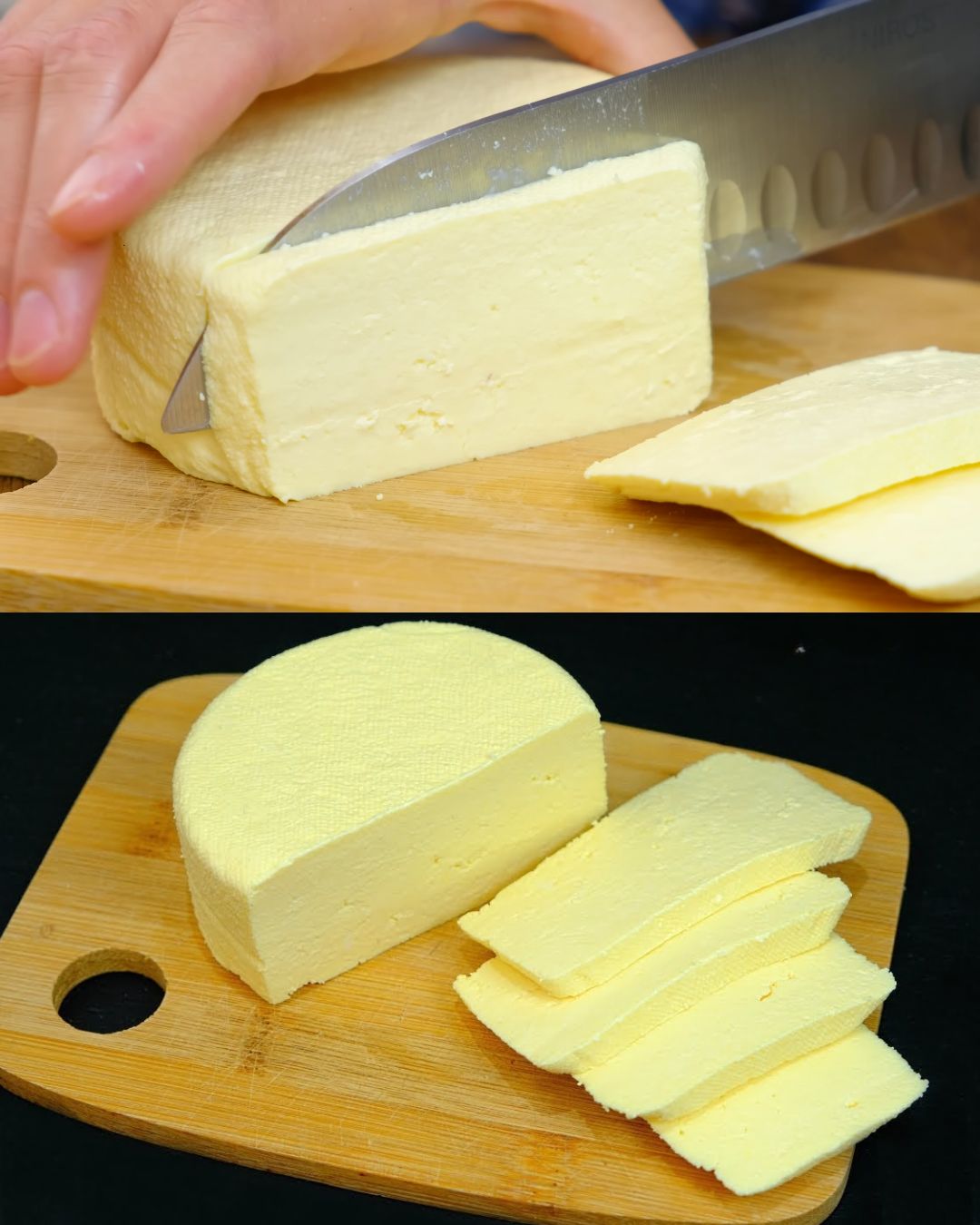
- The cheese is now ready to eat! Slice or crumble the fresh cheese and enjoy it with tea, coffee, or as part of a savory meal. It pairs wonderfully with fresh herbs, bread, or fruit.