
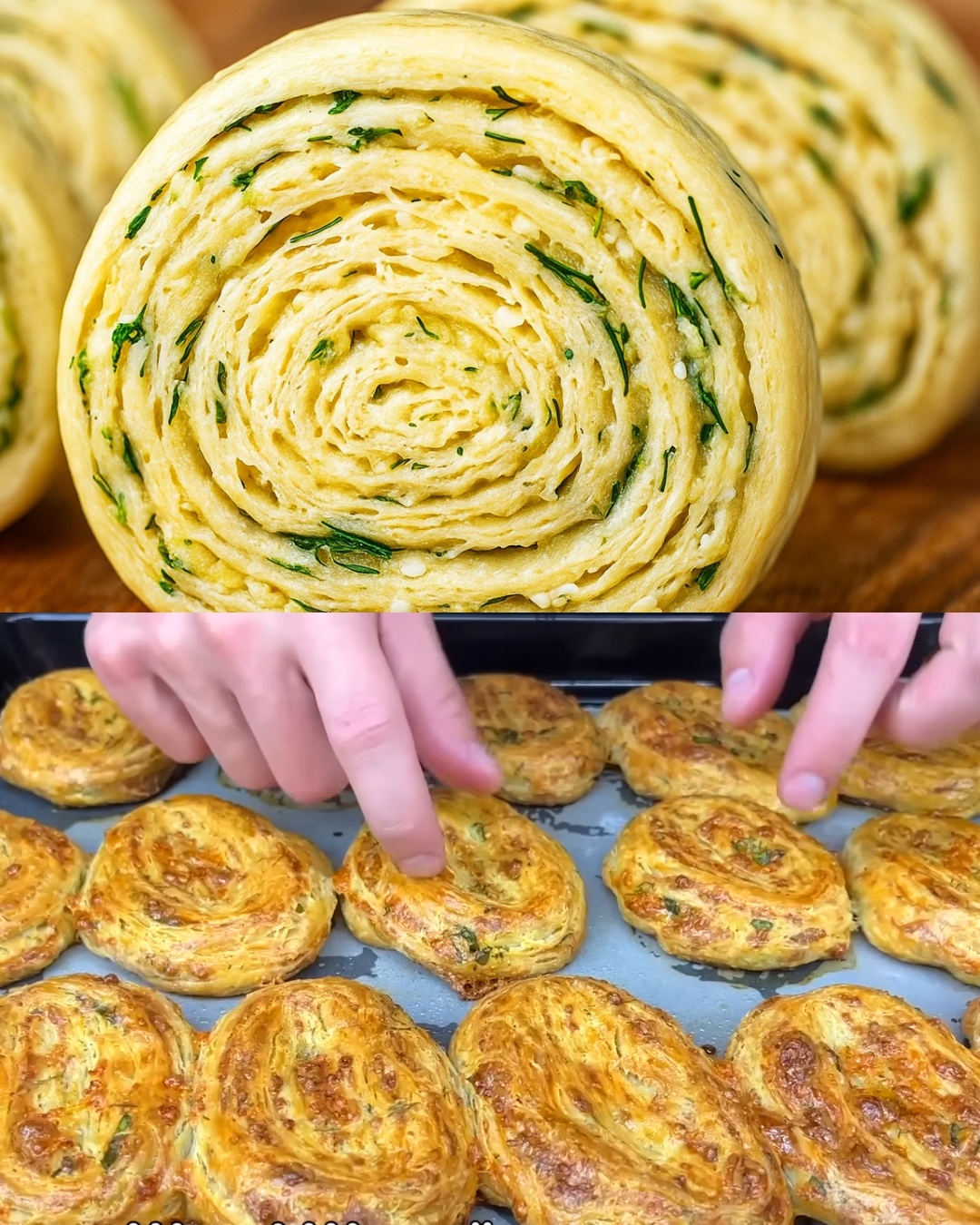
Get ready to step back in time with a puff pastry recipe that dates all the way back to 1876—a true treasure from our great-grandmothers’ kitchens! This is not your typical store-bought puff pastry that crumbles into greasy flakes. No, this one is rustic, tender, and beautifully layered, made with simple ingredients and a clever old-fashioned technique. What makes it truly special is that it uses yogurt and baking soda, which work together to create an incredibly soft and slightly tangy dough that puffs naturally during baking. The result? Golden, buttery, flaky pastries that melt in your mouth with every bite.
The filling brings a modern twist—a cheesy, herb-filled combination of spinach, dill, and freshly grated cheese. The buttery layers of pastry paired with the creamy, savory filling make each bite rich, fragrant, and deeply satisfying. Whether you enjoy these pastries for breakfast, as an afternoon snack, or with a steaming cup of tea, this recipe will make you feel like you’re baking straight from your grandmother’s handwritten cookbook.
Ingredients
For the Dough:
-
250 ml yogurt or kefir (1 cup or 8.5 fl oz)
-
5 g baking soda (1 tsp or 0.2 oz)
-
5 g salt (1 tsp or 0.2 oz)
-
1 egg
-
1 egg white (reserve the yolk for brushing)
-
50 ml vegetable oil (1.7 fl oz)
-
500–550 g wheat flour (17.6–19.4 oz or about 4.5 cups)
-
140 g butter (4.9 oz), softened for spreading
For the Filling:
-
350 g cheese, grated (choose mozzarella, feta, or any semi-hard cheese)
-
100 g chopped spinach (fresh or thawed and drained)
-
2 tbsp finely chopped dill (or parsley if you prefer)
For Brushing:
-
1 egg yolk
-
1 tbsp milk
For the Tea (Optional but Traditional):
-
15 g cranberries (1 tbsp or 0.5 oz)
-
15 g blueberries (1 tbsp or 0.5 oz)
-
15 g rose hips (1 tbsp or 0.5 oz)
-
8 g green tea (2 tsp or 0.3 oz)
Cooking Directions
1. Prepare the Dough Base:
In a large bowl, combine yogurt (or kefir), baking soda, salt, and the egg with one egg white (keep the yolk for later). Add the vegetable oil and stir everything together. The mixture should start to foam lightly—this is the baking soda reacting with the yogurt’s acidity, which will make your pastry soft and puffy later.
2. Add the Flour:
Gradually add in the flour (start with 500 g, then add more if needed). Mix first with a spatula until the dough comes together, then knead gently in the bowl for about 1–2 minutes.
3. Knead on the Table:
Transfer the dough to a clean surface and knead for 5–7 minutes. It should become smooth, elastic, and just slightly sticky. Don’t overwork it—this isn’t bread dough!
4. Rest the Dough:
Cover the dough with a towel and let it rest for 15–20 minutes. This helps the gluten relax, making it easier to roll out later.
5. Divide the Dough:
Weigh your dough (you should have about 820 g). Divide it into four equal portions and shape each into a smooth ball. Cover again and let rest for 5–10 minutes.
6. Roll and Layer:
Roll out one ball into a large circle, about 45 cm in diameter. Spread a quarter of the softened butter evenly over the surface. Fold the dough as shown in the old recipes—typically by folding it into thirds like a letter, then again into a square. Repeat this process for all the dough pieces.
7. Chill the Layers:
Stack your folded doughs on a wooden board, cover with plastic wrap, and refrigerate for 1–1.5 hours. This step helps the butter firm up, creating those signature puff layers once baked.
8. Make the Filling:
In a bowl, combine grated cheese, chopped spinach, and fresh dill. Mix well so the greens are evenly coated in the cheese. You can season with a pinch of salt if needed.
9. Shape the Pastries:
Take one piece of rested dough and roll it into a rectangle (about 10×20 cm). Add a spoonful of filling to the center, then roll it into a log. Press gently with your palm, fold, and slice as desired. You can shape them into rounds, braids, or even small triangles.
10. Brush and Bake:
Arrange the pastries on a parchment-lined baking sheet. Mix the egg yolk and milk, then brush each pastry for a shiny golden finish. Bake at 200°C (392°F) for 27–30 minutes or until puffed and deeply golden.
11. Brew the Traditional Tea:
While the pastries bake, prepare the tea by combining cranberries, blueberries, rose hips, and green tea in a teapot. Pour boiling water and steep for 5–10 minutes. This fruity, vitamin-rich blend pairs perfectly with the warm pastries.
12. Serve and Enjoy:
Once baked, let the pastries cool slightly, then serve them warm with your homemade tea. The layers will be soft, buttery, and beautifully separated—the aroma alone will take you back to your grandmother’s kitchen.
Nutrients (per serving, approx. 1 pastry):
Calories: ~270–300 kcal
Protein: ~8 g
Fat: ~15 g
Carbohydrates: ~30 g
Fiber: ~2 g
Calcium: ~120 mg
Why You’ll Love This Recipe
You’ll fall in love with this recipe because it’s the perfect blend of nostalgia and practicality. There’s no fancy equipment, no complicated folding like classic French puff pastry—just a time-tested method that delivers soft, layered dough with a crisp surface and melt-in-your-mouth texture. It’s forgiving and reliable, ideal even for beginners who want to master homemade puff pastry. Plus, it’s versatile—you can fill it with cheese and herbs, sweet jam, or even minced meat for a savory twist. Every batch feels like a warm hug from the past, wrapped in buttery goodness.
The Origins and Inspiration Behind the Dish
This recipe comes straight from the culinary traditions of the 19th century—specifically a cookbook published in 1876. Back then, kitchens didn’t have electric mixers or precise scales. Everything was done by hand, by feel, and by heart. Housewives relied on intuition, patience, and a deep connection with ingredients. Yogurt (or kefir) was commonly used as a natural leavening base because commercial yeast wasn’t always available. The combination of baking soda and fermented dairy gave the dough its lift, while layers of butter added indulgence without the need for hours of chilling and folding. This recipe is a window into a simpler time when cooking was slow, thoughtful, and full of love.
Advertisement
Ingredient Spotlight
-
Yogurt/Kefir: The secret to soft, airy pastry. The acidity activates baking soda, creating natural bubbles and tenderness.
-
Baking Soda: Acts as the leavening agent, helping the dough rise even without yeast.
-
Butter: Essential for creating flaky layers and rich flavor. Always use real butter for the best texture.
-
Cheese and Spinach: A balanced filling that’s creamy, slightly salty, and earthy—perfect with buttery pastry.
-
Dill: Adds that unmistakable fresh, aromatic note often found in Eastern European pastries.
Storage and Reheating Tips
These pastries store beautifully! Once cooled, place them in an airtight container at room temperature for up to 2 days, or refrigerate for up to 5 days. To reheat, pop them into a preheated oven at 180°C (350°F) for about 5–7 minutes—they’ll crisp up and taste freshly baked again. Avoid microwaving, as it will soften the layers and ruin that beautiful flaky texture. You can also freeze unbaked pastries; just brush with egg wash before baking them straight from the freezer—add 5 extra minutes to the bake time.
Common Variations to Try
-
Sweet Version: Replace the savory filling with sweetened cottage cheese, jam, or Nutella for a breakfast pastry.
-
Savory Meat Version: Fill with minced chicken or beef, caramelized onions, and herbs.
-
Mediterranean Style: Add sun-dried tomatoes, olives, and feta for a tangy twist.
-
Herb-Infused Dough: Mix dried herbs (like thyme or oregano) into the dough for added aroma.
-
Vegan Option: Substitute yogurt with plant-based yogurt, butter with margarine, and skip the egg wash.
Pairing Recommendations
This pastry pairs beautifully with herbal teas, black coffee, or even savory soups. Try it alongside a bowl of creamy mushroom soup, lentil stew, or tomato bisque for a complete meal. If serving it for breakfast or brunch, pair it with fresh fruit, Greek yogurt, or a light salad. For a cozy afternoon treat, it’s unbeatable with a pot of homemade cranberry and rosehip tea—the slight tartness of the tea complements the rich buttery pastry perfectly.
Health Benefits
Despite being indulgent, this puff pastry has its healthy sides. The yogurt-based dough provides probiotics that support gut health, while the spinach and dill filling adds vitamins A, C, and K, along with iron and antioxidants. The nuts and dairy contribute healthy fats and calcium, and when made with whole-grain flour, it can even add fiber. It’s all about balance—this pastry is satisfying enough to enjoy in moderation while still being wholesome and nourishing.
Conclusion
This Old-Fashioned Puff Pastry with Cheese and Greens Filling is more than just a recipe—it’s a piece of history reborn in your kitchen. Every step, from kneading the dough to layering the butter, connects you with generations of bakers who perfected the art of homemade pastry long before modern appliances existed. It’s rustic, golden, flaky, and full of flavor—a timeless classic that proves simple ingredients can create extraordinary results.
So, brew your tea, preheat your oven, and let the warm, buttery aroma fill your kitchen. Once you take that first bite, you’ll understand why this recipe stood the test of time. Happy baking, and may your kitchen always smell like home! 🥐☕