

Scones recipe success begins with high-quality ingredients and a gentle touch to ensure a light, airy texture every time you bake. This specific version features a bright citrus note and sweet raisins, making it the perfect companion for your morning tea or afternoon snack. Follow these detailed steps to master the art of the classic scone. 🍊


Table of Contents
Ingredients for Your Scones
To achieve the best results with this scones recipe, ensure your butter and cream are kept as cold as possible until the moment they are mixed.
- 2 cups all-purpose flour (plus extra for dusting)
- 1/4 cup granulated sugar
- 1 tablespoon baking powder
- 1/2 teaspoon salt
- 1/2 cup unsalted butter, cold and cubed
- 1/2 cup heavy cream, cold
- 1 large egg
- 1 tablespoon orange zest, freshly grated
- 1/2 cup golden raisins
- 1 teaspoon vanilla extract
- 1 tablespoon milk (for brushing the tops)
| Activity | Time |
| Total Time | 45 minutes |
| Prep Time | 20 minutes |
| Cook Time | 20 minutes |
| Cool Time | 5 minutes |
Step-by-Step Preparation
1. Preheat your oven to 400°F and line a large baking sheet with parchment paper to prevent sticking.
2. In a large mixing bowl, whisk together the flour, sugar, baking powder, and salt. Add the orange zest and toss to distribute.
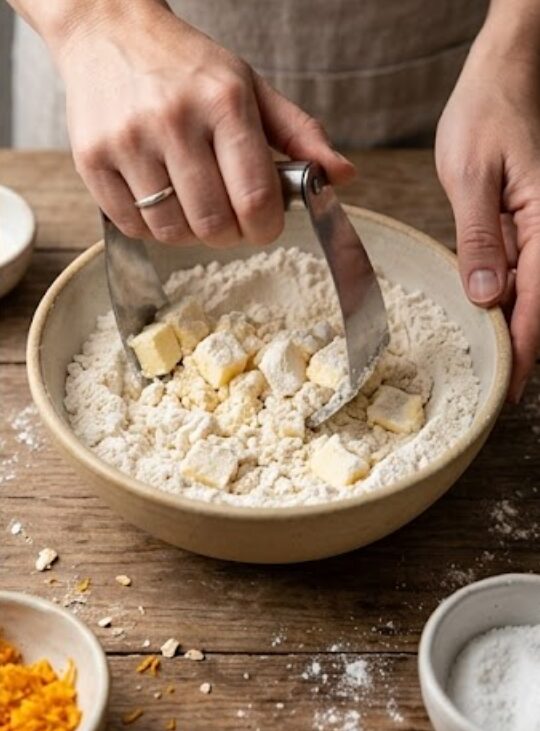
3. Use a pastry cutter or two forks to work the cold, cubed butter into the dry ingredients. Continue until the mixture resembles coarse crumbs with a few pea-sized pieces of butter remaining.
4. In a separate small bowl, lightly beat the egg with the heavy cream and vanilla extract.
5. Pour the liquid mixture into the flour mixture. Add the raisins and stir gently with a spatula just until the dough begins to come together. Do not overmix, or the scones will become tough.
6. Turn the dough out onto a lightly floured surface. Gently fold it over itself 3 or 4 times to create layers, then pat it into a circle about 1 inch thick.
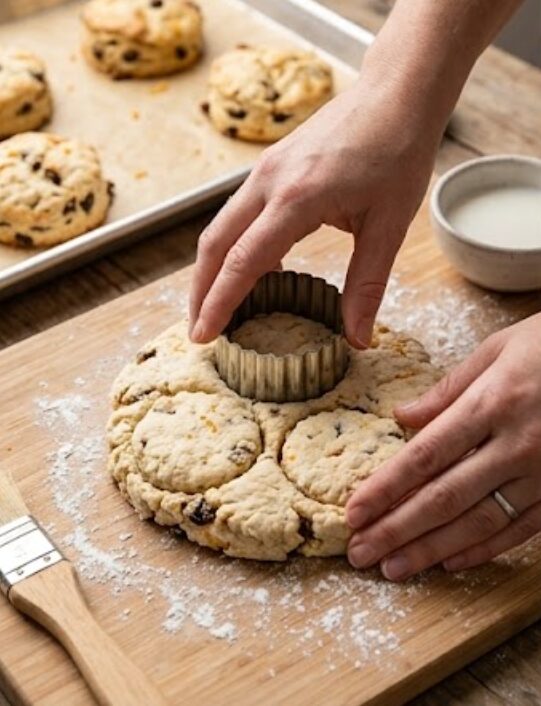
7. Use a round cutter to stamp out circles or use a knife to cut the disc into 8 equal wedges.
8. Place the pieces on the prepared baking sheet. Brush the tops lightly with milk for a golden finish.
9. Bake at 400°F for 18–20 minutes, or until the tops are lightly browned and the centers are set.
The Secret to a Perfect Scones Recipe
The defining characteristic of a great scone is its flaky, tender crumb. This is achieved through “shortening” the gluten, which is why we rub cold fat into the flour. When the cold butter hits the high heat of the oven, it creates steam, lifting the dough and creating those sought-after layers. 🥧
Why Temperature Matters in This Scones recipe
Using room-temperature butter is a common mistake. For this scones recipe, heat is the enemy of the dough during the preparation phase. If the butter melts before the tray enters the oven, the result will be a flat, heavy biscuit rather than a tall, fluffy scone. If your kitchen is particularly warm, consider chilling the dry flour mixture and your bowl in the refrigerator for 10 minutes before you start.
Nutrition Facts
Per serving (1 scone):
- Calories: 290 kcal
- Total Fat: 14g
- Saturated Fat: 9g
- Cholesterol: 55mg
- Sodium: 210mg
- Total Carbohydrates: 36g
- Dietary Fiber: 1g
- Sugars: 11g
- Protein: 5g
Serving and Storage Tips for Orange Raisin Scones
These orange raisin scones are best enjoyed warm, sliced horizontally and topped with a dollop of clotted cream or high-quality butter. The citrus notes pair beautifully with apricot jam or a simple honey drizzle. 🍯
To store leftovers, keep them in an airtight container at room temperature for up to 2 days. For longer storage, wrap them tightly and freeze for up to 3 months. When you are ready to eat, simply reheat them in an oven at 350°F for 5–8 minutes to restore that “just-baked” crispness.
Frequently Asked Questions
Can I use dried cranberries instead of raisins?
Absolutely! This scones recipe is versatile. You can swap the raisins for dried cranberries, currants, or even dark chocolate chips depending on your preference.
Why did my scones not rise?
The most common reasons are expired baking powder or over-handling the dough. Ensure your leavening agents are fresh and stop mixing as soon as the flour disappears.
Can I make the dough in advance?
Advertisement
Yes. You can prepare the dough, cut the shapes, and keep them on a tray in the refrigerator overnight. Bake them straight from the fridge the next morning for a fresh breakfast. ✨
Mastering this scones recipe is a rewarding experience that brings a touch of elegance to any table. By keeping your ingredients cold and your mixing minimal, you will produce professional-quality treats that rival any bakery.
Historical culinary records suggest that the scone originated in Scotland in the early 1500s, originally baked on a griddle as a large round cake. Modern versions, like this one, have evolved into the oven-baked delights we love today.
Have you tried making these at home yet? We would love to hear how your batch turned out or what unique ingredients you decided to add to the mix!