
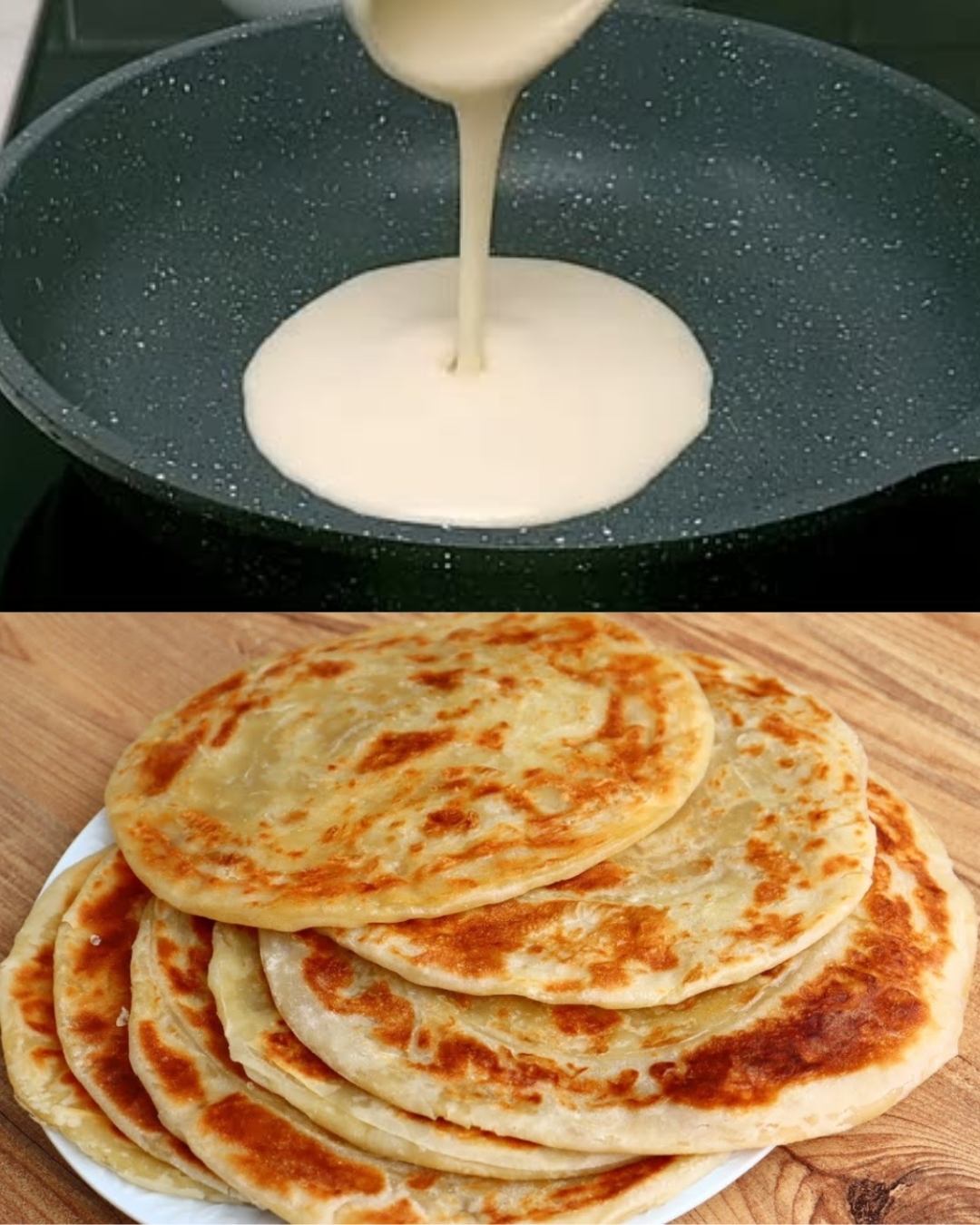
There’s nothing quite like the smell of freshly made Butter Layered Flatbread—crispy on the outside, soft and flaky inside, and full of that comforting buttery aroma that makes your kitchen smell like a bakery. This simple recipe transforms basic ingredients—flour, water, salt, and butter—into something extraordinary. It’s rustic yet indulgent, perfect for breakfast, brunch, or as a side to curries, soups, or stews. With just a few folds and layers, you’ll create a bread that’s beautifully golden and irresistibly flaky. Whether you enjoy it plain, with honey, or alongside your favorite savory dishes, this flatbread delivers warmth, flavor, and the pleasure of homemade baking in every bite.
Full Recipe
Ingredients
-
Less than 4 cups of white flour (about 410 g)
-
1.5 cups of water (about 300 ml)
-
1 teaspoon of salt (about 6 g)
-
160 g butter (softened or melted, divided for layering and cooking)
Cooking Directions
-
Prepare the Dough: In a large mixing bowl, combine the flour and salt. Gradually pour in the water while mixing with your hand or a wooden spoon until a soft, pliable dough forms. The dough should not be sticky, so adjust with a bit more flour if necessary.
-
Knead the Dough: Transfer the dough to a lightly floured surface and knead for about 8–10 minutes until smooth and elastic. The kneading process is essential—it helps the gluten develop, which gives the flatbread structure and chewiness.
-
Rest the Dough: Shape the dough into a ball, cover it with a damp cloth or plastic wrap, and let it rest for 20–30 minutes. Resting allows the gluten to relax, making the dough easier to roll out later.
-
Divide and Shape: After resting, divide the dough into 6–8 equal portions (depending on how large you want your flatbreads). Roll each piece into a small ball.
-
Roll Out the Dough: Take one ball and roll it out thinly on a floured surface. Brush it generously with melted butter, then lightly dust it with a pinch of flour.
-
Create the Layers: Roll up the buttered dough sheet like a jelly roll (into a log), then coil it into a spiral (like a snail shell). Flatten the coil gently with your palm and roll it out again into a round flatbread about 1/4 inch thick. This layering technique ensures your flatbread will be beautifully flaky once cooked. Repeat with the remaining dough portions.
-
Cook the Flatbread: Heat a non-stick skillet or cast-iron pan over medium heat. Add a small amount of butter and place one rolled-out flatbread in the pan. Cook for 2–3 minutes on each side or until golden brown spots appear. Brush each side with more butter as it cooks for extra flavor and crispness.
-
Serve: Stack the cooked flatbreads on a plate and cover them with a clean towel to keep them warm and soft until ready to serve. Serve warm with jam, honey, cheese, curry, or even as a wrap for grilled meats or vegetables.
Nutrients
-
Calories: ~290 kcal per flatbread
-
Protein: 6 g
-
Fat: 15 g
-
Carbohydrates: 33 g
-
Fiber: 1.5 g
-
Sodium: 200 mg
-
Calcium: Trace amounts
-
Cholesterol: Moderate (from butter)
Why You’ll Love This Recipe
You’ll love this Butter Layered Flatbread for its simplicity and taste. It’s made with just four everyday ingredients, yet it feels luxurious thanks to the buttery layers and crisp edges. It’s endlessly versatile—serve it alongside soups, stews, or curries, or enjoy it on its own with a drizzle of honey or a sprinkle of sugar. The dough is forgiving and easy to work with, making it ideal for beginners or anyone who loves homemade bread without yeast. Plus, the reward is pure comfort: golden, flaky bread with a melt-in-your-mouth texture that beats store-bought options any day.
The Origins and Inspiration Behind the Dish
This style of flatbread takes inspiration from a variety of traditional recipes around the world—Indian paratha, Middle Eastern malawach, and European buttery layered breads like the Turkish gözleme. The method of layering butter between rolled dough is centuries old, designed to make bread richer and more satisfying without complicated ingredients. In many cultures, this bread was prepared for celebrations, morning meals, or to accompany hearty dishes. The recipe you’re reading is a modern, simplified take that preserves the old-world charm while being accessible to home cooks everywhere.
Ingredient Spotlight
-
Flour: The foundation of the bread—use all-purpose flour for the best balance of softness and structure. For a chewier texture, you can mix in a bit of bread flour.
-
Water: Hydrates the flour and activates gluten development, which gives structure to the bread.
-
Salt: Enhances flavor and balances the richness of the butter.
-
Butter: The star of the recipe, creating the signature layers and adding both flavor and flakiness. Opt for high-quality butter for the richest taste.
Storage and Reheating Tips
Store leftover flatbreads in an airtight container or ziplock bag once completely cooled. They’ll keep for up to 3 days at room temperature or up to a week in the refrigerator. To reheat, warm them on a dry skillet for about 30 seconds per side or in a 160°C (320°F) oven for 5 minutes. You can also freeze them by placing parchment paper between each flatbread and storing them in a freezer bag for up to 2 months. Reheat straight from frozen on a hot pan for the best texture.
Common Variations to Try
-
Garlic Butter Flatbread: Mix minced garlic or garlic powder into the melted butter before brushing between layers.
-
Herb-Infused Flatbread: Add dried rosemary, thyme, or parsley for aromatic layers.
-
Cheese-Stuffed Version: Sprinkle grated mozzarella or feta cheese between the layers for a gooey, cheesy center.
-
Sweet Flatbread: Brush the layers with melted butter mixed with sugar and cinnamon for a dessert-style version.
-
Whole Wheat Option: Substitute half or all of the flour with whole wheat flour for a nuttier taste and added fiber.
Pairing Recommendations
This flatbread pairs beautifully with just about anything. For a savory meal, serve it alongside stews, curries, lentil dishes, or creamy soups. It’s particularly delicious with butter chicken, vegetable korma, or mushroom soup. For breakfast or snacks, enjoy it with scrambled eggs, cheese, or avocado. If you’re in the mood for something sweet, drizzle it with honey, maple syrup, or melted chocolate. It’s also a great base for wraps—fill it with grilled chicken, roasted vegetables, or fresh greens for a quick lunch.
Health Benefits
While this recipe is definitely indulgent, it still has a few nutritional perks. The flour provides carbohydrates for energy, while the butter, in moderation, adds healthy fats and fat-soluble vitamins like A and D. Because it’s homemade, you control the ingredients—no preservatives, no artificial additives, and no excess salt. You can also make it healthier by reducing the butter slightly or using clarified butter (ghee), which has a higher nutrient density and less lactose. Pair it with a protein-rich dish or vegetable stew, and it becomes part of a balanced, satisfying meal.
Advertisement
Conclusion
This Butter Layered Flatbread is the perfect combination of simplicity and indulgence—a bread that celebrates the magic of basic ingredients turned into something golden, flaky, and irresistible. It’s the kind of recipe that brings warmth to your table and comfort to your day, whether you serve it as a breakfast treat, a side to a family dinner, or a snack to share with friends. The layering technique may seem humble, but the result is rich, elegant, and deeply satisfying. Once you make it, you’ll understand why this traditional style of bread has endured through generations—it’s homemade comfort at its finest, one buttery layer at a time.